Introduction
Imagine you’re a farmer in northern Ghana.
You sell maize.
You earn cash.
You have no utility bill.
No formal employment.
No tax returns.
No proof of address.
You download a fintech app hoping to receive payments digitally.
Instead…
Your account is suspended.
Not because you’re a criminal.
Because you cannot satisfy traditional KYC requirements.
This is happening across Africa.
Why fintech exists
African fintechs were created because traditional banks failed to reach millions.
They provide:
- Mobile Money
- Digital wallets
- Cross-border remittances
- Merchant payments
- Microloans
- Savings
The goal is financial inclusion.
Then comes AML
Every regulated fintech must comply with:
- Customer Due Diligence (CDD)
- KYC
- Sanctions screening
- Transaction Monitoring
- Source of Funds
- PEP screening
- Suspicious Activity Reporting
Necessary?
Absolutely.
Easy?
Not always.
The African reality
Here you bring your experience.
Explain that in many African markets:
Formal employment isn’t the norm
People may earn money through:
- Street vending
- Fishing
- Farming
- Livestock
- Small trading
- Seasonal work
Income is legitimate.
Documentation often isn’t.
Source of Funds
Europe
Salary
↓
Bank account
↓
Payslip
↓
Tax return
Africa
Cash trading
↓
Agricultural sales
↓
Livestock
↓
Family business
↓
Cross-border commerce
↓
No paperwork
That doesn’t automatically make the customer high risk.
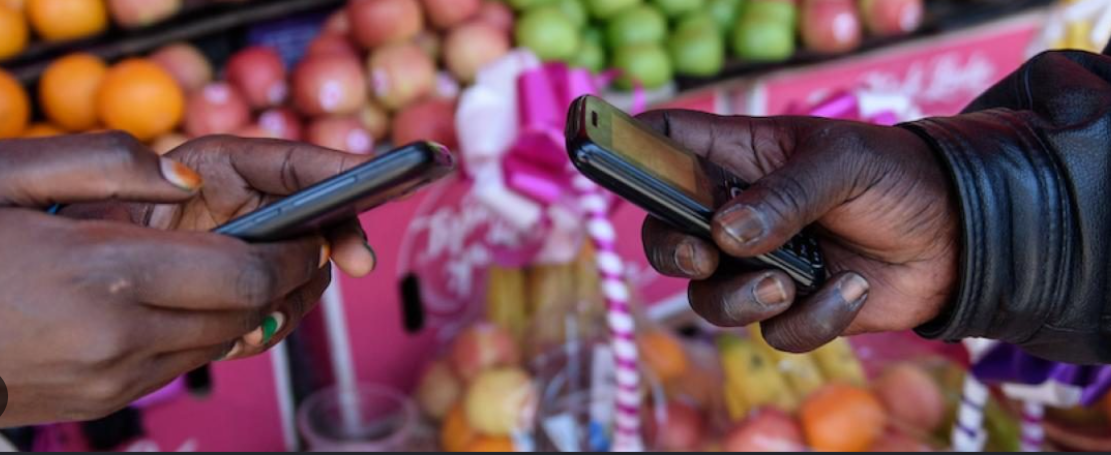
The Mobile Money revolution
Millions of Africans have never owned a bank account.
Yet they use:
- M-Pesa
- MTN Mobile Money
- Orange Money
- Airtel Money
Every day.
Mobile Money has become the first financial account for many users.
Applying traditional banking expectations to these ecosystems can create unnecessary barriers to access. The FATF’s guidance highlights the importance of adapting controls to local risk rather than assuming all underserved customers present higher risk.
The AML paradox
The irony.
If compliance becomes too strict…
Customers don’t become criminals.
They simply leave.
Back to:
- Cash
- Hawala
- Informal traders
- Friends
- Unregulated channels
Then regulators lose visibility altogether.
Why risk-based AML matters
This is where FATF comes in.
The FATF does not expect every customer to undergo identical due diligence.
Instead, it promotes a risk-based approach:
Low risk
↓
Simplified Due Diligence
Higher risk
↓
Enhanced Due Diligence
The goal is proportionate controls that support inclusion while protecting financial integrity.
Practical examples
A woman selling vegetables at a local market.
Should she provide:
- Tax returns?
- Three months of bank statements?
- Employment contract?
Probably not.
Instead:
- Mobile Money history
- Community verification
- National ID
- Transaction behaviour
- Account limits
may be more appropriate depending on the jurisdiction and risk assessment.
What fintechs should do
Instead of asking
“Can this customer produce European documentation?”
Ask
“How can we understand this customer’s risk within the local context?”
Examples:
- Behavioural monitoring
- Tiered accounts
- Transaction limits
- Ongoing monitoring
- Alternative identity verification
- Local risk indicators
Key takeaway
The objective of AML is not to stop people accessing financial services.
The objective is to stop criminals abusing them.
When compliance programmes fail to distinguish between lack of documentation and actual financial crime risk, they risk undermining financial inclusion—the very objective many African fintechs were created to achieve. Recent FATF guidance explicitly encourages countries and firms to use the flexibility within the standards to support financial inclusion through proportionate risk-based controls.
Leave a Reply