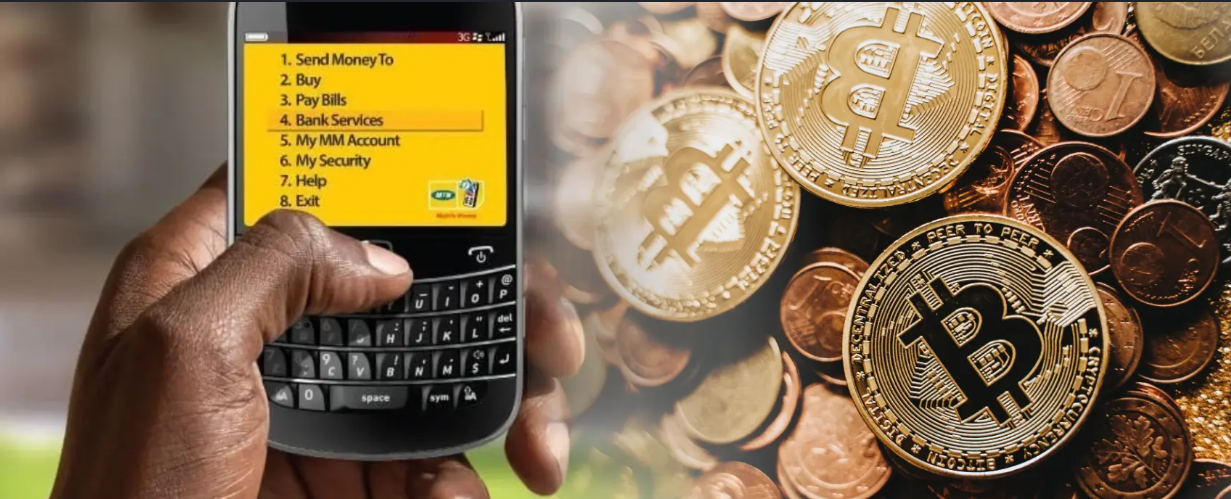
Africa’s financial system is no longer built around the traditional bank account alone.
Across the continent, people can now move between mobile money wallets, bank accounts and crypto platforms—sometimes within the same financial journey and sometimes within minutes.
A customer might receive money through mobile money, move part of it to a bank account, purchase stablecoins through a crypto platform, and eventually send value to another country. For a legitimate customer, this can simply be a faster and cheaper way to manage money.
For financial crime professionals, however, it creates a very different question:
Are we still looking at three separate financial sectors, or are we looking at one interconnected ecosystem?
I believe the second view is becoming increasingly important.
Africa’s financial system is becoming layered
Mobile money has already transformed financial inclusion across Sub-Saharan Africa. The World Bank estimates that 40% of adults in the region had a mobile money account in 2024, up from 27% in 2021.
Meanwhile, the scale of the mobile money industry continues to grow. GSMA’s 2026 industry report records $2.1 trillion in global mobile money transaction value in 2025, 2.3 billion registered accounts and 593 million active 30-day accounts.
At the same time, crypto adoption is developing alongside these existing payment networks.
This creates three overlapping layers:
1. Banks
Traditional accounts, salaries, savings, business banking, international transfers and access to the formal financial system.
2. Mobile money
Fast, accessible payments and transfers, often connected to telecom networks and agent networks rather than traditional branches.
3. Crypto and digital assets
A separate layer for transferring and storing value, particularly useful for certain cross-border transactions, investment activity and access to dollar-linked stablecoins.
The interesting part is not any individual layer.
It is what happens between them.
The bridge between mobile money and crypto
Crypto is sometimes discussed in Africa as if it exists separately from everyday financial activity.
That is increasingly difficult to justify.
A mobile-money user may eventually interact with a crypto exchange, a P2P trader, a bank or a payment provider. The boundaries are becoming less obvious as fintech companies, telecom operators and financial institutions expand their services.
Stablecoins are particularly relevant.
Their dollar-linked nature can make them attractive in markets where people face currency volatility, expensive international transfers or limited access to traditional foreign-currency services.
The FATF’s March 2026 report specifically highlighted risks associated with stablecoins and P2P transactions through unhosted wallets.
This does not mean that stablecoin activity is inherently suspicious.
It means that compliance teams increasingly need to understand why the customer is using it, where the funds came from and where they go next.
That distinction is crucial.
Banks are no longer necessarily the starting point
For years, the bank account was effectively the centre of the financial relationship.
That assumption is becoming weaker.
A customer may first enter the financial system through a mobile wallet. A small business may build its transaction history through mobile payments before opening a bank account. Someone receiving funds from abroad may choose mobile money rather than a traditional bank transfer.
And eventually, some customers may move value into crypto.
This changes the role of banks.
A bank may see only one part of the customer’s financial activity.
For example:
Mobile money → bank account → crypto exchange → external wallet
From the bank’s perspective, it may simply see a transfer to a crypto-related business.
The mobile-money provider may see the original source of funds.
The crypto platform may see the final conversion.
No single institution necessarily sees the complete picture.
That is one of the most important AML challenges emerging from this ecosystem.
The financial crime risk is in the connections
Criminals do not necessarily need to choose one financial channel.
They can exploit the connections between them.
Imagine a network where multiple mobile-money accounts receive relatively small payments. Funds are then consolidated into one account, transferred to a bank, converted into crypto and moved to another wallet.
Looking at each transaction individually might not immediately reveal the broader pattern.
But looking at the relationship between the transactions could reveal:
- multiple unrelated counterparties;
- rapid movement between mobile-money and bank accounts;
- repeated cash-in/cash-out activity;
- unusual wallet activity;
- crypto purchases inconsistent with the customer’s profile;
- rapid conversion into stablecoins;
- transfers involving higher-risk jurisdictions;
- accounts functioning as pass-through accounts;
- unusual device, phone-number or beneficiary relationships.
The risk therefore becomes less about a particular product and more about velocity, behaviour and connectivity.
Recent research is already exploring how machine-learning approaches can identify laundering patterns in African mobile-money environments, including velocity, counterparty diversity and burst activity.
But Africa cannot simply import a European AML model
There is another side to this discussion.
A transaction that looks unusual in a traditional banking environment may be perfectly normal in an African market.
Mobile-money ecosystems often serve customers who operate partly or entirely outside the formal economy.
A small trader might receive dozens of low-value payments every day.
A family may receive money from several relatives.
A customer may have no conventional payslip or formal address.
A small business may not have a sophisticated website or corporate banking relationship.
And someone may legitimately move between cash, mobile money, banking and digital assets.
This is why context matters.
The FATF has increasingly emphasised proportionality and financial inclusion in its risk-based approach. Its 2025 changes specifically encouraged greater use of simplified measures where risks are lower and highlighted the relationship between financial inclusion and effective AML/CFT.
The objective should not be to treat every informal or digital transaction as suspicious.
It should be to identify behaviour that genuinely does not make sense.
The crypto layer adds another challenge
Crypto introduces a different type of visibility.
Blockchain transactions can be technically traceable, but identifying the real person behind an address is another matter.
The FATF’s July 2026 update found continued progress in regulating virtual assets but also significant gaps in effective licensing, supervision and enforcement. It highlighted growing risks involving organised crime, stablecoins, P2P transactions through unhosted wallets and offshore VASPs.
This creates an important paradox:
Crypto can make transactions more visible while making ownership and intent harder to establish.
For investigators, blockchain analytics can therefore be extremely useful—but it should not replace traditional AML investigation.
The key questions remain:
Who is the customer?
Where did the money originate?
Why was the transaction made?
Who ultimately benefited?
The future may belong to interconnected compliance
If Africa’s financial ecosystem continues developing in this direction, AML teams will need to become better at looking across products rather than inside individual products.
A bank should not necessarily assess a customer’s banking behaviour in isolation.
A mobile-money provider should understand the risks created by rapid movement into other financial channels.
Crypto platforms need to understand how customers fund and cash out their wallets.
And regulators and Financial Intelligence Units increasingly need mechanisms for sharing intelligence across sectors.
This is particularly important as telecom companies themselves move deeper into financial services. In August 2026, MTN said it was exploring banking licences in selected markets as it expands its lending activities beyond traditional telecom services.
The old boundaries are becoming less clear.
Telecoms are becoming financial companies.
Banks are becoming digital platforms.
Fintechs are becoming payment providers.
Crypto businesses are becoming part of the wider financial infrastructure.
What should AML teams be looking for?
The answer is not simply more alerts.
It is better connections between data points.
Financial institutions operating in African markets should increasingly consider:
1. Cross-channel behaviour
How does money move between mobile money, banks, payment institutions and crypto platforms?
2. Customer context
Does the customer’s occupation, business activity and expected income explain the observed behaviour?
3. Network relationships
Are multiple accounts, phone numbers, devices, beneficiaries or wallets connected?
4. Transaction velocity
How quickly does money enter one channel and leave through another?
5. Cash-to-digital patterns
Does cash become mobile money, then bank funds, then crypto?
6. Crypto conversion behaviour
Are customers repeatedly converting funds into stablecoins or other virtual assets without an obvious economic rationale?
7. Cross-border activity
Does the movement of funds correspond with the customer’s legitimate personal or commercial relationships?
These indicators become much more powerful when combined.
Africa’s three-layer financial ecosystem is an opportunity too
It would be easy to frame this development purely as a financial crime problem.
That would miss the bigger picture.
The combination of mobile money, banking and digital assets could create more choice, greater financial inclusion and faster cross-border payments.
Africa’s fintech sector is already moving beyond basic payments toward credit, savings, B2B payments and broader financial services. BCG describes this as a new phase of “financial depth” following the first wave of transactional inclusion.
The challenge is making sure financial innovation does not outpace financial integrity.
The goal should not be to build three separate compliance systems.
It should be to understand the ecosystem connecting them.
Because the next generation of financial crime in Africa may not happen inside a bank, a mobile wallet or a crypto platform.
It may happen between them.
And that is where AML professionals need to start looking.
Leave a Reply